
Blog
AI is the New Pink: How Emory is Using ‘Robot Eyes’ to Save Lives


Have you ever wished your doctor had a crystal ball? Or maybe a pair of high-tech "robot eyes" that could see things even the most experienced human expert might miss? Well, if you live in Georgia, that sci-fi dream is becoming a reality right in our backyard. At Emory University’s AI.Health Institute, researchers are teaching computers how to be the ultimate wingman for radiologists.
We often think of "pink" as the color of breast cancer awareness, but at Emory, they’re adding a bit of "digital blue" into the mix. Artificial Intelligence (AI) is quickly becoming the newest tool in our fight against the disease, and it’s doing a lot more than just crunching numbers. It’s making screening smarter, fairer, and a whole lot more personal.
As a leading breast cancer awareness organization in Atlanta, we at I Will Survive, Inc. are always keeping an eye on the latest tech. We want to make sure you’re in the loop about how these innovations might change your next check-up. And since Emory’s AI.Health institute is the first of its kind in Georgia, this isn’t just big news, it’s hometown news. Research like this helps I Will Survive, Inc. stay at the forefront of what’s happening right here in our backyard in Atlanta, which means we can keep sharing timely, relevant updates with the community we love.
Meet the Visionaries: Dr. Baid and Dr. Madabhushi
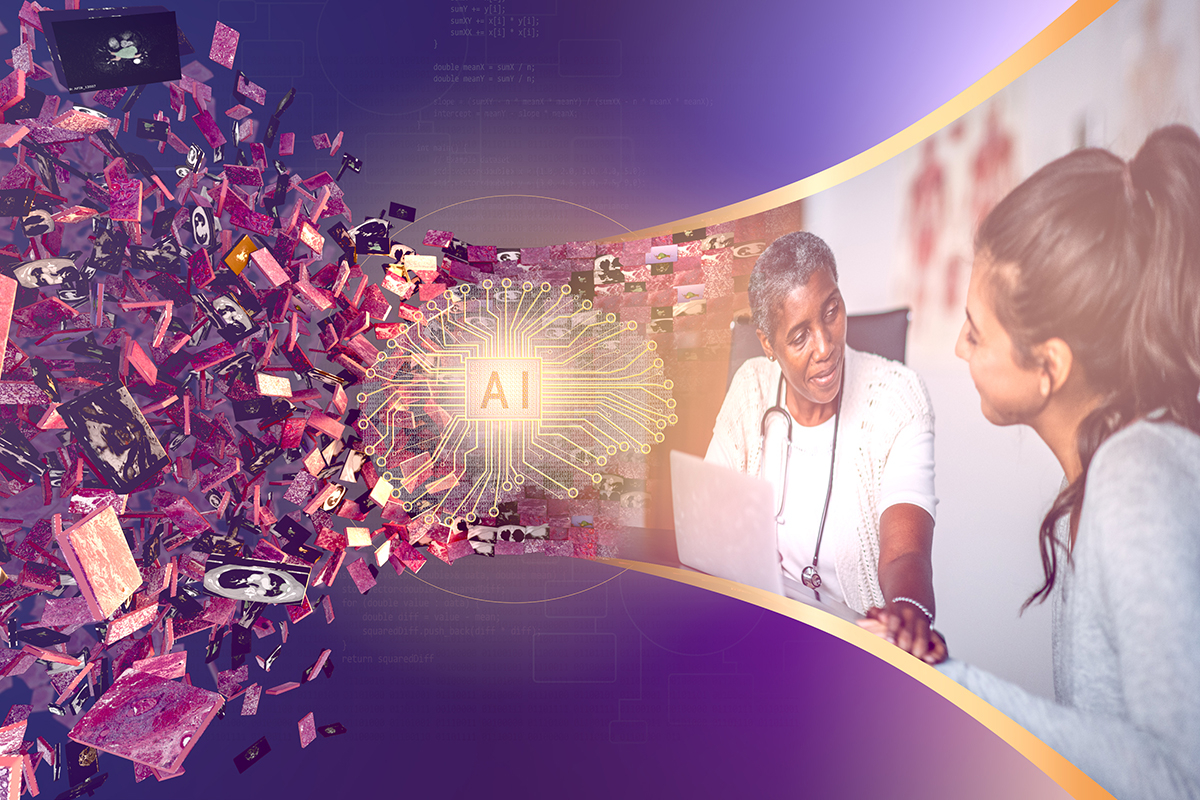
Before we dive into the "how," let’s talk about the "who." The magic is happening under the guidance of brilliant minds like Dr. Ujjwal Baid and Dr. Anant Madabhushi. These aren't just computer geeks in lab coats; they are visionaries who believe that every patient deserves a treatment plan that fits them like a glove.
Dr. Baid is a rising star at Emory’s AI.Health, focusing on how we can use massive amounts of data to train AI models. Meanwhile, Dr. Madabhushi, a global leader in medical AI, is pushing the boundaries of "precision medicine." Their goal isn't to replace doctors with robots (don't worry, your doctor isn't going anywhere!), but to give those doctors "superpowers" to catch cancer earlier and predict which treatments will actually work.
Perhaps you’ve felt like just another number in a waiting room before. The work these doctors are doing is designed to end that feeling. By using AI, they’re moving us toward a world where your care is based on your specific biology, not just a general guideline.
The EMBED Dataset: Teaching AI to Be Fair
One of the biggest problems with older AI tech was that it was often biased. If you train a computer using only photos of one type of person, it won't be very good at helping everyone else. This is a huge issue in healthcare, especially for Black women, who historically face higher mortality rates from breast cancer.
This is where the EMBED (Emory BrEast imaging Dataset) comes in. It is a massive collection, we’re talking over 3 million images!, that Dr. Baid and the team are using to train their AI. Because Atlanta is such a diverse city, the data in EMBED is incredibly inclusive.
By feeding the AI millions of images from diverse populations, including a significant percentage of Black women, Emory is ensuring that the "robot eyes" are trained to spot abnormalities in everyone. It’s about digital equity. When the AI is "fair," the screenings are more accurate for everyone, regardless of their background.

The "Two-for-One" Special: Finding Heart Disease in a Mammogram
Imagine going in for your routine mammogram and getting a "bonus" health check. It sounds too good to be true, but AI is making it happen.
Dr. Baid’s research has shown that AI can look at a standard mammogram and see things that aren't even related to breast cancer, like signs of heart disease. Specifically, the AI can detect something called Breast Arterial Calcification (BAC). These are tiny calcium deposits in the arteries of the breast. While they don't cause cancer, they are a huge red flag for cardiovascular issues.
Heart disease is still a leading cause of death, so catching these signs early during a breast cancer screening is a total game-changer. It’s like going to the mechanic for an oil change and having them realize your brakes are about to fail. It’s that extra layer of protection that could literally save your life.
If you’re interested in learning more about how to navigate your own health screenings, we encourage you to get educated through our resources.
Precision Medicine: The Right Treatment at the Right Time
We’ve all heard the horror stories of "one-size-fits-all" cancer treatments, aggressive chemo that might not even be necessary or radiation that doesn't quite hit the mark. The AI research at Emory is focused on ending that "trial and error" phase of medicine.
By analyzing the patterns in those 3 million images, the AI can help doctors predict how a specific tumor will behave. Will it spread quickly? Will it respond to a certain drug? By answering these questions before treatment even begins, doctors can choose the most effective path forward.
This is what we call "personalized care." It’s about finding the right treatment for the right person at the right time. For an ngo in atlanta like ours, seeing this tech thrive locally is incredibly exciting. It means our community has access to some of the most advanced care in the world. And because Emory’s AI.Health institute is the first of its kind in Georgia, we’re not just watching innovation happen from afar. We’re seeing it unfold right here at home, which helps us stay informed, stay relevant, and stay a little ahead of the curve without needing a crystal ball.

Why This Matters for You (and for Atlanta)
You might be wondering, "That's great for the scientists, but what does it mean for me?"
It means hope. It means that the next time you or a loved one goes for a screening, there’s a much higher chance of catching things early. It means fewer false alarms and more accurate diagnoses.
At I Will Survive, Inc., we know that the journey doesn't end with a diagnosis. We provide support for every step of the way. Whether you need financial assistance, wellness programs, or just someone to talk to, we are here. If you or someone you know needs a hand, please get support from us today.
We are proud to be a breast cancer awareness organization in Atlanta that stays on the cutting edge. Innovation isn't just about cool gadgets; it's about making sure our mothers, sisters, and friends are around for a long, long time.

How You Can Get Involved
Scientific breakthroughs like the ones happening at Emory don't happen in a vacuum. They need community support, awareness, and funding. You can be a part of this movement, too!
Perhaps you have some extra time to give? We’d love to have you join our team of volunteers. Check out our volunteerism page to see how you can help us continue our mission in the Atlanta area.
Or, if you’re more of a "party for a cause" person, you won't want to miss our upcoming Art Jazz Gala. It’s a fantastic way to celebrate survivors and raise funds for the programs that keep our community healthy.
Summary: The Future is Bright (and Smart)
The work being done by Dr. Baid, Dr. Madabhushi, and the entire Emory AI.Health team is a beacon of hope. As the first AI.Health institute of its kind in Georgia, Emory is putting Atlanta on the map in a very smart way. By using "robot eyes" and massive datasets like EMBED, they are:
- Ensuring Fairness: Making sure AI works for everyone, especially those in underserved communities.
- Providing Bonuses: Finding heart disease risks during routine mammograms.
- Personalizing Care: Helping doctors pick the perfect treatment plan for every individual.
- Keeping Atlanta Forward-Focused: Helping organizations like I Will Survive, Inc. stay at the forefront of what’s happening right here in our backyard.
- Saving Lives: Catching issues earlier and more accurately than ever before.
AI might sound cold and mechanical, but in the hands of these researchers, it’s being used with a whole lot of heart. It turns out, AI really is the new pink.
If you'd like to support our work in bringing these resources and awareness to the community, please consider a donation. Every bit helps us ensure that no one in Atlanta has to fight this battle alone.
Stay strong, stay informed, and remember: we’re in this together.

Ready to take the next step? Whether it’s getting screened, volunteering, or just sharing this post with a friend, your actions matter. Get in touch with us if you have any questions!