
Blog
You Just Got the Call: 10 Things to Know When Diagnosed with Breast Cancer


The phone rings. Maybe you were at work, picking up the kids from school, or just sitting down for dinner. Then you hear those words: "The biopsy came back positive." In an instant, the world feels like it’s shifted on its axis. Everything sounds muffled, and your mind starts racing a million miles an hour.
First off, we want you to know we’re so sorry you're hearing this. It’s a lot. At I Will Survive, Inc., we've walked alongside thousands of families in Atlanta and beyond who have stood exactly where you are right now. We know that the "new normal" feels anything but normal.
But here’s the thing: while you might feel like you’ve lost control, you haven't. You’re entering a fight, and you’ve got a whole army behind you. As a leading breast cancer awareness organization in Atlanta, we’ve put together this guide to help you navigate the next few weeks. Take a deep breath. Let’s walk through this together.
1. It’s Okay to be Overwhelmed (Seriously, Take a Breath)
The moment you get the diagnosis, your brain likely goes into "emergency mode." You might feel the urge to call everyone you know, or conversely, you might want to crawl under the covers and never come out. Both reactions are completely valid.
It’s okay to feel overwhelmed. It’s okay to cry. It’s okay to be angry. We often tell our clients that the first thing you need to do isn't to schedule surgery: it’s to breathe. Perhaps you can give yourself 24 to 48 hours to just be before you start making life-altering decisions. The cancer didn't appear overnight, and taking a day or two to process the shock isn't going to change your prognosis. We’re in this with you, and we promise you don't have to have all the answers by Tuesday.
2. Get a Second Opinion (It’s Standard Practice)
You might feel like you're "cheating" on your doctor if you ask for a second opinion, but we want to reassure you: any good oncologist expects and encourages it. This is your life and your body. Getting a second set of eyes on your pathology report and your treatment plan isn't being difficult; it’s being diligent.
Sometimes, different hospitals have access to different clinical trials or specialized equipment. A second opinion can confirm the original plan, which gives you peace of mind, or it might offer a different approach that better fits your lifestyle.

3. Know Your Subtype (ER/PR/HER2)
"Breast cancer" is actually an umbrella term for several different diseases. To treat it effectively, your medical team needs to know what’s "driving" the growth. You’ll hear terms like ER (Estrogen Receptor), PR (Progesterone Receptor), and HER2 (Human Epidermal Growth Factor Receptor 2).
- Hormone Positive (ER+/PR+): These cancers use hormones to grow.
- HER2 Positive: These cancers have too much of a specific protein.
- Triple Negative: This means the cancer isn't fueled by estrogen, progesterone, or the HER2 protein.
Knowing your subtype is like knowing the make and model of a car before you try to fix it. It dictates whether you’ll need certain medications like Herceptin or hormone blockers.

4. You Are a "Survivor" From Day One
There’s a common misconception that you only become a "survivor" once you finish treatment and ring the bell. We disagree. At I Will Survive, Inc., we believe you are a survivor from the very moment of diagnosis.
Survival is a mindset. It’s the act of getting out of bed, going to that first appointment, and choosing to move forward. You are surviving the news, the tests, and the uncertainty. We want you to wear that title with pride right now. If you want to represent that strength, you can check out our survive clothing which helps fund our programs for families in need.
5. Financial Help Exists (We Can Help)
One of the scariest parts of a diagnosis isn't just the medical side: it’s the bills. Between co-pays, lost wages, and transportation to appointments, the costs add up fast. Many people find themselves choosing between paying for treatment and paying their rent.
We don't want you to ever have to make that choice. Our mission at I Will Survive, Inc. is to provide financial assistance to those in the thick of the battle. Whether it's help with housing, utilities, or groceries, we aim to keep families stable. It seems we can't solve every problem in the world, but we certainly can help alleviate the "financial toxicity" of cancer.

6. Ask for a Nurse Navigator
The healthcare system is a maze. You’ll have an oncologist, a surgeon, a radiologist, and maybe a plastic surgeon. Who coordinates them? Who do you call when you have a weird side effect at 10 PM?
Enter the Nurse Navigator. Most major hospitals have them, but they don't always offer them up front. Perhaps you could ask your doctor, "Do we have a Nurse Navigator I can work with?" These incredible professionals are your "insiders." They help schedule appointments, explain complex medical jargon, and ensure you don't fall through the cracks. They are the glue that holds your treatment plan together.
7. Don't Google Everything
We’ve all been there: it’s 3 AM, you can’t sleep, and you find yourself 40 pages deep into a forum from 2005. Stop. The internet is full of outdated information and "worst-case scenarios" that likely don't apply to your specific subtype or stage.
If you need to research, stick to trusted, updated sites like the I Will Survive, Inc. blog or the American Cancer Society. Better yet, write down your questions and ask your medical team directly. If you're interested in things like genetic risks, look for specialized resources that explain the science simply.

8. Understand Your Legal Rights (FMLA)
If you're working, you might be worried about losing your job or your insurance. It’s important to know about the Family and Medical Leave Act (FMLA). This federal law can protect your job for up to 12 weeks while you seek treatment.
We suggest talking to your HR department sooner rather than later. You don't have to share every detail of your diagnosis, but letting them know you have a medical situation will allow them to help you set up the necessary paperwork. There are also protections under the Americans with Disabilities Act (ADA) that might require your employer to provide "reasonable accommodations," like a flexible schedule on chemo days.
9. Mental Health is Health
Your body is going through a lot, but so is your mind. Anxiety, depression, and "scanxiety" (the fear of upcoming scans) are incredibly common. We believe that caring for your spirit is just as important as caring for your cells.
Don't be afraid to ask for a referral to a therapist who specializes in oncology. Many survivors find that talking to someone who isn't a family member allows them to express fears they might be "filtering" for their loved ones. We also encourage you to look into palliative care, which isn't just for end-of-life; it's about symptom management and improving your quality of life throughout the journey.
10. Build Your "Support Squad"
You are strong, but you don't have to be a superhero. When people ask, "What can I do to help?": give them a specific task.
- "Can you pick up the kids on Tuesdays?"
- "Could you start a meal train for us?"
- "Can you just come over and watch a movie so I don't have to be alone?"
Your "Support Squad" is what gets you through the finish line. Beyond your friends and family, look for community organizations. We host events like our Art & Jazz Gala to bring people together and remind them they are part of a larger, vibrant community that cares.
Takeaways for Your Journey
If you remember nothing else from this post, remember these three things:
- You are not alone. There is a massive community in Atlanta and beyond ready to catch you.
- Knowledge is power. Understanding your subtype and your rights gives you back the control that cancer tries to take away.
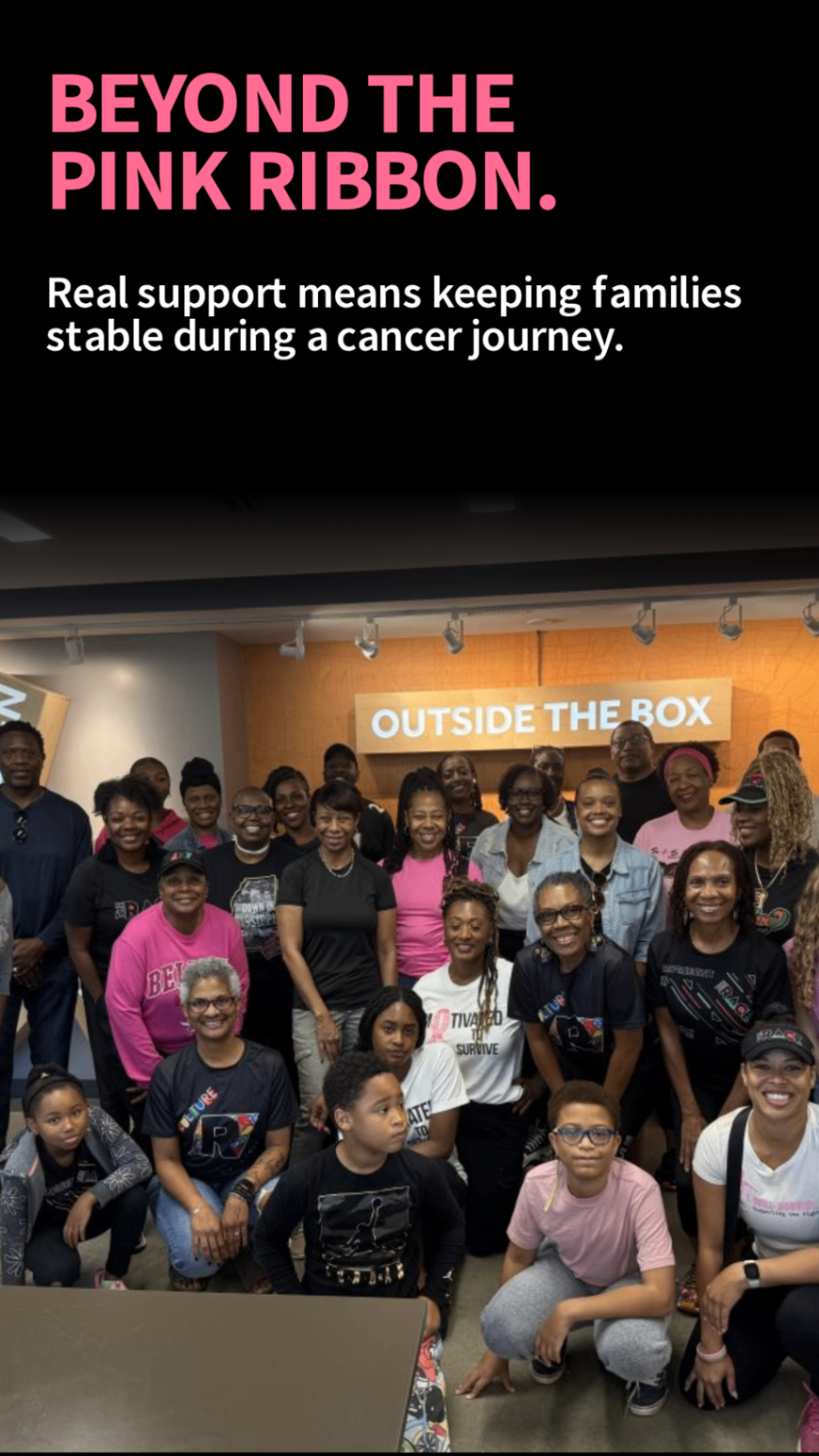
- Stability matters. Focus on keeping your home life as stable as possible, and let organizations like ours help with the heavy lifting.
If you’re feeling the weight of a recent diagnosis, we’d love to hear from you. Whether you need financial assistance, educational resources, or just want to get involved with a group that understands, we are here.
Ready to take the next step?
Visit our Get Support page to see how we can help you with the practical side of this fight. We’re in your corner, every step of the way.